
Introduction
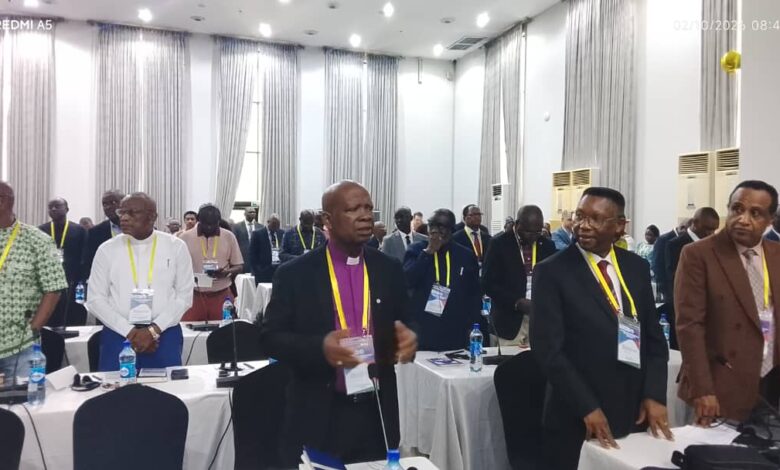
The All-Africa CEOs and Board Chairs Consultation Meeting was convened in Lagos, Nigeria, from 9–13 February 2026, bringing together chief executive officers and board chairpersons of Bible Societies across the African continent, as well as representatives of the United Bible Societies. The gathering was hosted by The Bible Society of Nigeria (BSN).
Delegates were drawn from over 30 African countries, representing national Bible Societies affiliated with the global fellowship of the United Bible Societies (UBS). The consultation served as a high-level leadership forum designed to evaluate the state of Bible mission work in Africa and develop coordinated strategic responses to emerging challenges and opportunities.
The meeting provided a platform for dialogue, collaboration, policy alignment, and shared learning among African Bible mission leaders.
Objectives of the Meeting
The consultation aimed to:
- Identify critical gaps hindering effective Bible mission across Africa.
- Strengthen collaboration among African Bible Societies.
- Develop strategic responses to changing social, technological, and ministry realities.
- Promote innovation in Bible translation, distribution, and engagement.
- Align continental priorities with global Bible mission strategies.
- Encourage sustainable governance, leadership development, and financial resilience.
Opening and Welcome Address
In his welcome remarks, Pastor Samuel Sanusi, General Secretary/CEO of BSN, described the meeting as both strategic and transformational, emphasising Africa’s urgent need for accessible and engaging Scriptures. He noted that although Africa possesses immense spiritual vitality and demographic potential, significant gaps remain in Scripture access, funding sustainability, leadership capacity, technology adoption, and Bible engagement among younger generations.
He further described Nigeria as “Africa in miniature,” highlighting its cultural and linguistic diversity and the continent-wide relevance of hosting the meeting in Lagos.
Key Messages and Strategic Discussions
Africa’s Changing Mission Identity
A central message emerging from the consultation was that Africa is no longer merely a mission field but a mission force. Leaders emphasised that African churches and institutions now possess growing leadership capacity, innovation, and spiritual vitality.
Participants were challenged to move:
- From dependence to ownership,
- From discussion to implementation,
- From delay to delivery.
Identification of Critical Gaps
Deliberations highlighted several major gaps affecting Bible mission advancement:
- Scripture Access Gap
Millions still lack access to the Bible in their heart languages. - Translation Speed and Quality
There is a need for accelerated translation projects across diverse linguistic communities. - Leadership and Governance Capacity
Strengthening institutional accountability and succession planning. - Financial Sustainability
Developing locally driven funding models. - Technology and Digital Engagement
Responding to digital transformation and changing reading habits. - Bible Engagement Gap
Bridging the divide between Bible availability and meaningful engagement.
These areas were identified as priorities requiring coordinated continental action.
Collaboration and Continental Alignment
The meeting emphasised the importance of African Bible Societies speaking with one collective voice on advocacy, funding partnerships, innovation, and strategic mission priorities. Participants agreed that collaboration would strengthen Africa’s influence within global Bible mission initiatives and improve resource sharing across nations.
Contributions from Key Leaders
Africa Affinity Group Leadership
Leaders called on participants to become “repairers of broken walls,” urging practical execution of strategic plans rather than prolonged deliberation.
United Bible Societies (UBS)
UBS leadership reaffirmed global support for African Bible mission, noting that worldwide Bible translation projects continue across hundreds of languages, yet approximately 1.5 billion people globally still lack access to a full Bible in their heart language.
Conclusion
The All-Africa CEOs and Board Chairs Consultation Meeting successfully provided a strategic platform for reflection, collaboration, and action toward advancing Bible mission in Africa. Anchored on the theme “Bridging Critical Gaps to Advance the Bible Mission in Africa – A Strategic Response,” the consultation challenged leaders to adopt innovative, accountable, and collaborative approaches to ensure wider Scripture access and deeper engagement across the continent.
The outcomes of the meeting are expected to shape Bible mission priorities in Africa for years to come, strengthening the continent’s capacity to serve as both a recipient and a driver of global Christian mission.